
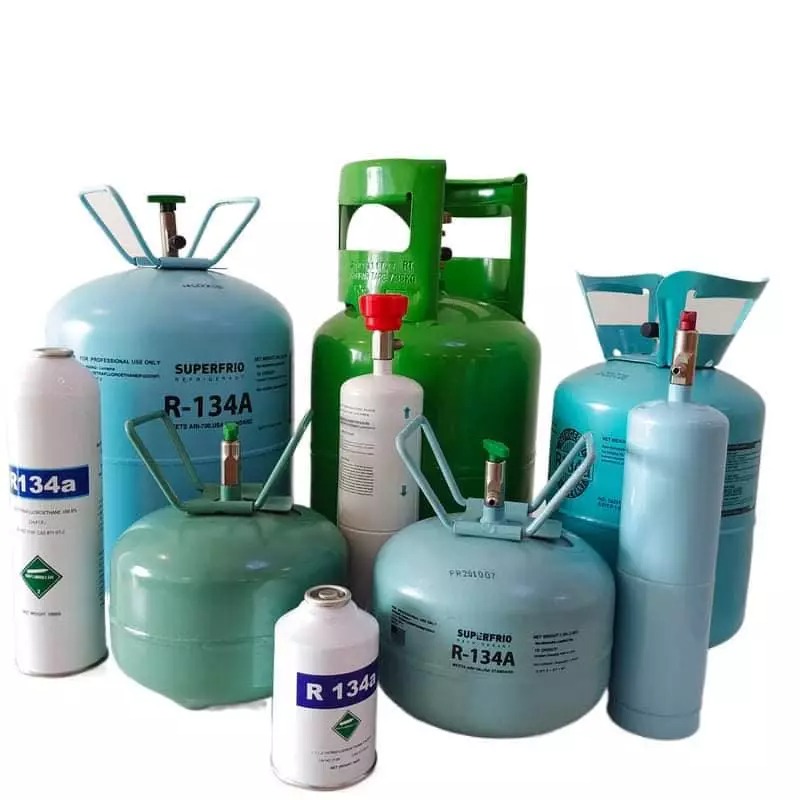
Buying refrigerant gas by the container is different from buying a few cylinders locally. The gas itself is a commodity; what decides whether an order goes smoothly is the packaging, the paperwork and the import rules at your end. This guide walks through each step for first-time and regular importers.
Step 1: Confirm what you are allowed to import
Refrigerants are regulated in most countries. HCFCs such as R22 are being phased out under the Montreal Protocol, and HFCs such as R134a, R410A and R404A are being phased down under the Kigali Amendment. In practice this means many countries require an import licence, a quota allocation or registration with the environment authority. Check this first, because it determines which gases and quantities you can bring in. Our refrigerant regulations page gives an overview.
Step 2: Choose the packaging
- Disposable cylinders: the lowest cost per shipment and the trade standard in many markets. They are not permitted in some regions, including the European Union.
- Refillable cylinders: required where disposables are banned, and reusable where you have a return system.
- Small canisters: for automotive and retail channels.
- ISO tanks and ton tanks: the most economical per kilogram if you have filling equipment and want to pack under your own brand.
Step 3: Understand minimum order quantities
For cylinders, the practical minimum is usually set by the container. Freight cost per cylinder falls sharply when a container is full, so most importers order by the 20-foot container and mix gases to fill it. Ask for the loading quantity per container for each cylinder size when you request a quote.
Step 4: Agree the trade terms
- Incoterm: FOB if you use your own freight forwarder, CIF if you want the price to include sea freight and insurance to your port.
- Payment: T/T and L/C are the usual methods in this trade.
- Brand: factory brand or your own OEM design on cylinders and cartons.
Step 5: Check the documents
A refrigerant shipment normally travels with a commercial invoice, packing list, bill of lading, safety data sheet, certificate of analysis and a dangerous-goods declaration. Your customs broker may also ask for the UN number and HS code of each gas, which you can find on our UN number and HS code page. Safety and technical sheets are on the MSDS and TDS pages.
Step 6: Plan for dangerous-goods shipping
Non-flammable refrigerants such as R134a, R410A and R404A ship as class 2.2. Flammable refrigerants such as R32, R290 and R600a ship as class 2.1 and have stricter stowage rules, so they can take longer to book. Allow for this in your delivery schedule.
What we supply
Our range covers HFC refrigerants, HCFC refrigerants and HC refrigerants, plus helium gas, in cylinders, canisters and bulk tanks. Our step-by-step page on how to import refrigerant gas covers the process in more detail.
Request a quote
Refrigerant Gas International supplies importers, distributors and service companies worldwide. To get a price, open any product in our product range, click Request a Quote and tell us the gas, package size, quantity and destination port. You can also reach our sales team through the contact page by email, phone or WhatsApp.
Frequently asked questions
Can I mix several gases in one container?
Yes, mixed containers are common. Flammable and non-flammable gases have different shipping rules, so send us the mix you want and we will confirm it.
Do you deliver worldwide?
We quote to ports worldwide. Whether a specific gas can be imported depends on the rules of the destination country.
How quickly can I get a price?
Send the gas, package size, quantity and destination port through any product page, and our sales team will reply by email.
